



























Minimalist Living and the Rituals That Hold a Day Together
Minimalist Living and the Rituals That Hold a Day Together

Words: Jackie Ashley
Ashley & Co. founder Jackie Ashley shares reflections from Japan — a journey through considered spaces, everyday rituals and the quiet beauty found in the details.
What stayed with me most from a recent trip to Japan wasn't the landmarks, it was the life going on quietly around them.
The shoes lined up at a doorway. A ceramic bowl set just so on a sill. The care taken wrapping even the most ordinary purchase. Small things, easy to miss but nothing about them felt accidental, everything felt considered.
That's minimalism, distilled: not having less, but making sure each ‘thing’ carries its full weight, because nothing has been added that doesn't need to be there. It read, more than anything, as a kind of respect for daily life.


At the shrine entrance, there's a stone basin and a row of wooden ladles. You fill one, rinse each hand, then pour a little water into your palm to rinse your mouth. Afterwards, you pause for a moment before crossing through. No one rushes it. It isn't really about being clean so much as acknowledging the threshold, marking the line between outside and in.
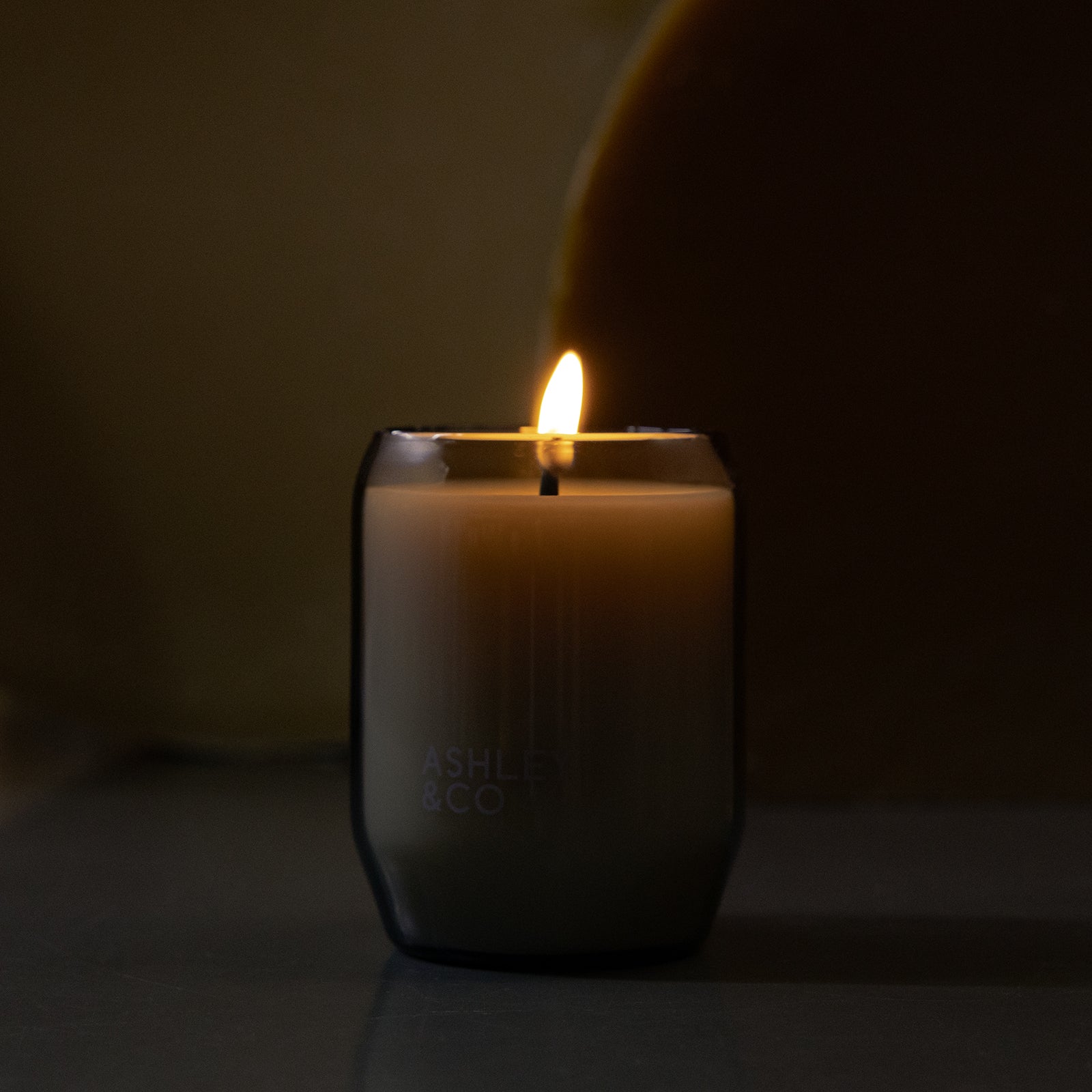
That same instinct for a threshold showed up everywhere, at a smaller scale. In Kurashiki, the equivalent arrived at day's end: a lit candle. Scent, here, isn't a statement. It's a hinge between one part of the day and the next, the same ritual as the shrine entrance, just moved indoors.


We stayed in a traditional Kyoto townhouse, down a narrow lane near small bakeries and cafés. Old machiya architecture with a subtly modern hand. Shoes came off at the door. The tatami room was warm underfoot, the garden on one side of it, a small meditation space on the other: two different kinds of quiet, a few steps apart. The light moved slowly through the day, and the whole place felt entirely intentional. Nothing in it was extra; it had clearly been chosen, not simply accumulated.


Even the most functional objects carried it. On a Tokyo backstreet lined with kitchen shops, we spent an afternoon among ceramics, lacquerware, stationery, and tools built for one job and shaped well for it, nothing over-designed, everything well made. A wrapped parcel, however small, was wrapped properly. Everything about it said care: care in the materials, care in how a thing works, care in how it feels in your hand.

Japan seems to already understand something we've always circled back to at Ashley & Co., that good design isn't about excess, it's about care. A minimal life isn't an empty one. It's a considered one. It's a philosophy we've long admired from a distance. Before long, we'll get to sit a little closer to it. More on that soon.


Related

Design Notes: Copenhagen & Paris

A Day in Brooklyn with Emma Anderson